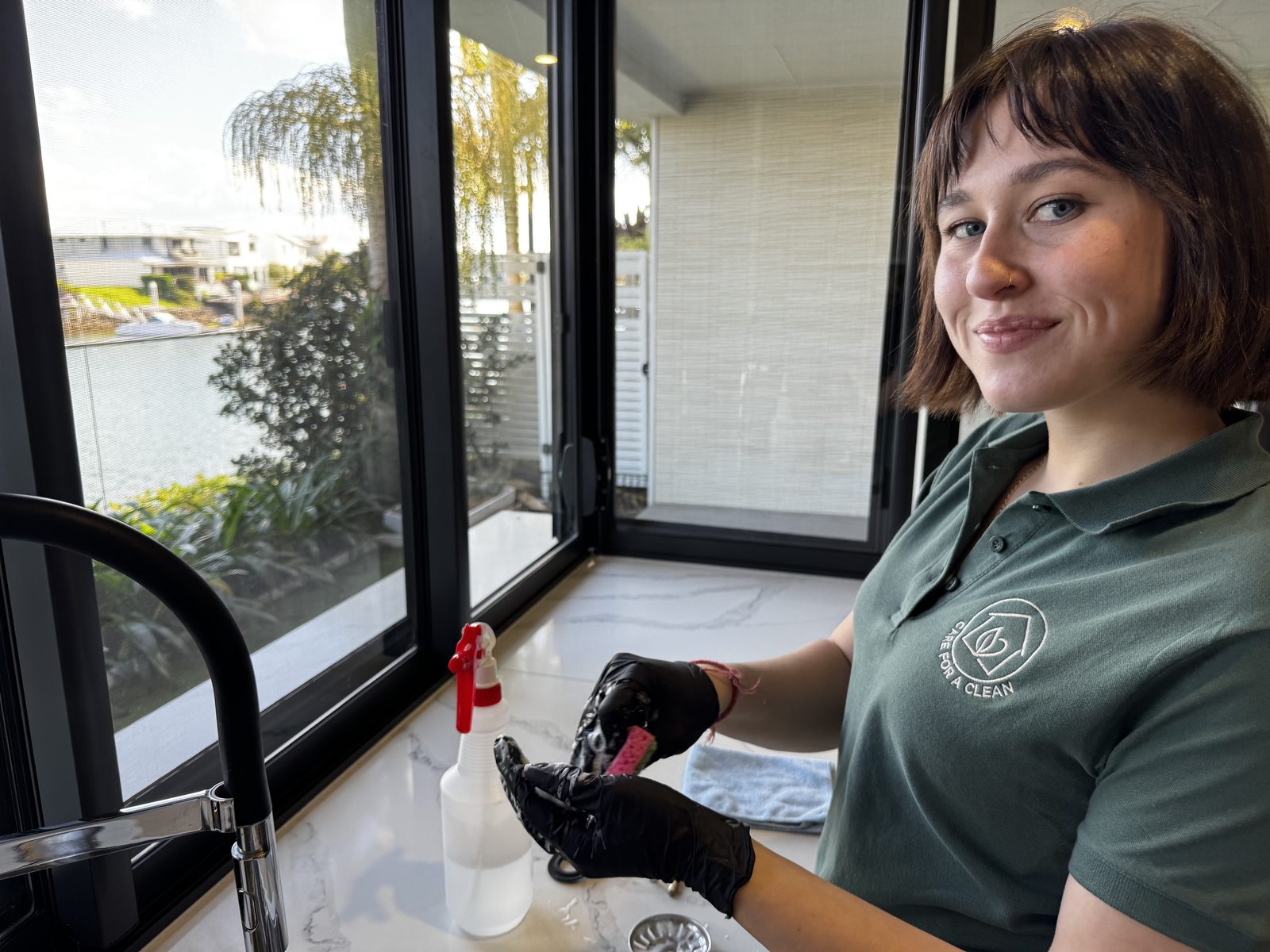
How I found out about this the hard way
I started cleaning to earn money alongside university. I was working 40-hour weeks and feeling pretty good about the money, right up until I looked up the award rate and realised I was being severely underpaid. When I started asking around, I found the same thing had happened to a lot of other cleaners, and it was being done through contracting arrangements and legal loopholes rather than by accident.
That is the short version of why Care For A Clean exists. It matters to the people hiring cleaners as much as it matters to the cleaners themselves. If the person cleaning your home has been wrongly classified as a contractor, there may be no workers compensation policy covering them when they are injured on your property, no public liability cover when something gets broken, and a business underneath it all that churns through staff faster than it can train them. Those three things land on you, and they are the subject of the rest of this article.
Key takeaways
- Sham contracting is telling a worker they are a contractor when the relationship is really employment. It is prohibited by the Fair Work Act 2009.
- An ABN does not make someone a contractor. How the work actually operates is what decides it.
- A misclassified cleaner often has no workers compensation cover, which can leave the client exposed.
- You can ask a cleaning company six direct questions that make the arrangement obvious.
- The Fair Work Ombudsman takes anonymous reports, and you do not have to give your name.
What sham contracting actually is
Sham contracting is when an employer tells a worker they are an independent contractor when the working relationship is really one of employment. The Fair Work Act 2009 prohibits three related things (Fair Work Ombudsman, Sham contracting):
- Misrepresenting an employment relationship as an independent contracting arrangement (section 357).
- Dismissing, or threatening to dismiss, an employee in order to re-engage them as a contractor to do the same work (section 358).
- Making a statement the employer knows is false in order to persuade an employee to become a contractor (section 359).
Courts can order civil penalties for these contraventions, and separately order back-payment of the wages, superannuation and leave the worker should have received. Following the Closing Loopholes reforms, an employer defending a section 357 claim has to show it reasonably believed the arrangement was genuine contracting, having regard to the size and nature of its business. A small operator and a national contractor are not held to the same standard of what they should have known.
The difference between a genuine contractor and a sham
Genuine contractors exist in cleaning and there is nothing wrong with hiring one. A genuine contractor runs their own cleaning business. They decide what to charge, choose which jobs to accept, buy their own equipment, carry their own insurance, and can send one of their own people if they are unavailable. They are working in their business, and the company hiring them is simply a customer.
An employee works inside someone else's business. They are rostered on, paid a rate the company sets, use the company's products, wear the company's uniform, and have to turn up in person. Sham contracting is when a company runs the second arrangement and calls it the first.
The paperwork does not decide which one it is. Plenty of cleaners are told to get an ABN as a condition of starting work and are treated as contractors from that day. An ABN is a tax registration and nothing more. Signing a document with the word "contractor" in it does not settle the question either. Since the Closing Loopholes changes, the test looks at how the relationship actually operates rather than at what the contract calls it.
| In practice | Genuine contractor | Employee, whatever the contract says |
|---|---|---|
| Who sets the price? | They do | The company does |
| Who picks the jobs? | They do, and can turn work down | The company rosters them on |
| Whose equipment? | Their own | The company's |
| Can they send someone else? | Yes, one of their own workers | No, they must attend personally |
| Who insures the work? | They carry their own | The company has to |
| Who carries the risk? | They do, and can lose money on a job | Nobody, they are paid for hours worked |
Why this lands on you as a client
Most people assume worker classification is a matter between a company and its staff. In cleaning it has a direct effect on the person hiring.
The first issue is insurance. Employees are covered by workers compensation. Contractors generally are not covered by the hiring business, and many individual cleaners do not hold their own cover. If a cleaner is injured in your home or your premises and there is no workers compensation policy behind them, working out who is responsible becomes your problem too. That is one of the reasons we tell people to ask about workers compensation specifically rather than accepting a general assurance that a company is insured, as covered in our guide to choosing a cleaning company.
The second issue is consistency. Underpaid workers leave. When a company runs on misclassified labour, turnover is high and training is the first thing to go, because there is little sense investing weeks in someone who will be gone by winter. The drop in standard that clients complain about is usually a staffing problem wearing a cleaning costume.